Millions of people recognize Helen Keller as a global symbol of courage and resilience. Born in 1880, she faced life without sight or hearing from a very young age, yet she became a prolific writer and advocate. One of her most famous observations about human behavior is the idea that when one door of happiness closes, another opens. This perspective encourages individuals to look beyond their current setbacks to find the next opportunity. Today, her message remains a cornerstone of personal development and mental clarity, helping people navigate the inevitable changes that come with modern life.
Table of Contents
Understanding the meaning of the open door
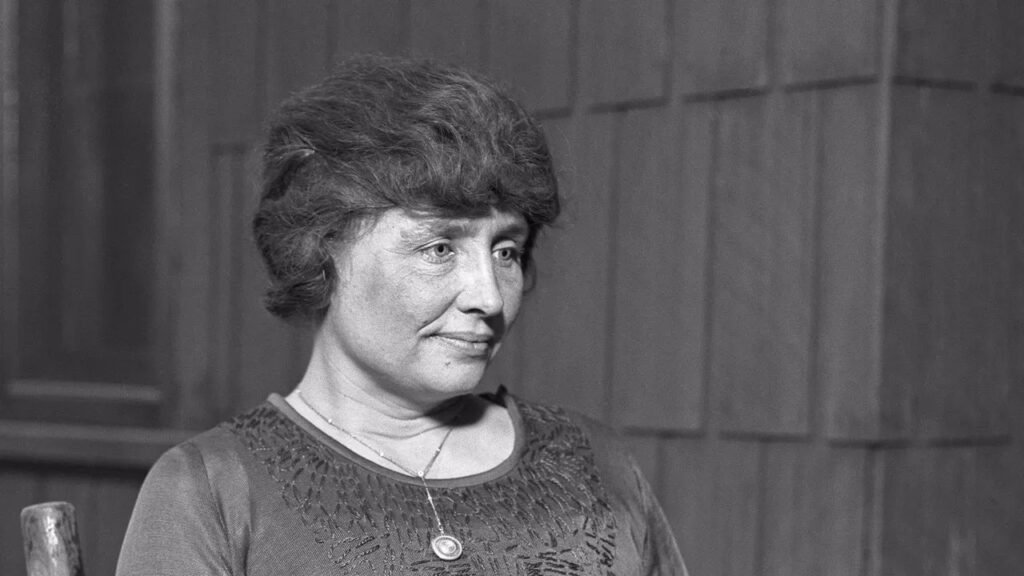
The quote suggests that while loss is a natural part of life, it is rarely the end of the journey. When a source of happiness such as a job or a personal relationship ends, it is common to feel a sense of deep disappointment. However, Keller pointed out that new paths often appear simultaneously. The difficulty lies in our tendency to focus so intently on what we have lost that we miss the new possibilities standing right in front of us. This observation is not just about staying positive; it is a factual look at how human attention works during a crisis.
When we experience a significant change, our minds often get stuck in a loop of regret. By understanding that happiness is not a single fixed destination, we can begin to train our eyes to look for the next door. This shift in perspective is essential for growth and allows us to adapt to new circumstances with more confidence.
Helen Keller and her path to success
Helen Keller was a pioneer in many fields, proving that physical limitations do not determine a person’s future. Her educational journey was supported by her lifelong teacher, Anne Sullivan, who helped her break through the silence and darkness of her early years. Below is a comparison of some of her major historical milestones.
| Year | Achievement or Milestone | Historical Significance |
| 1880 | Born in Tuscumbia, Alabama | Beginning of a life that would change history |
| 1887 | Met teacher Anne Sullivan | Started her journey into language and education |
| 1903 | Published The Story of My Life | Shared her experiences with a global audience |
| 1904 | Graduated from Radcliffe College | First deafblind person to earn a Bachelor of Arts |
| 1915 | Co founded Helen Keller International | Established a legacy of global health advocacy |
| 1920 | Co founded the ACLU | Became a leader in civil rights and social justice |
Lessons in resilience and modern application
In the world of today, where change happens rapidly, the wisdom of looking for open doors is more relevant than ever. Whether it is a career shift or a change in personal health, focusing on what is possible leads to better outcomes. Behavioral science confirms that people who redirect their attention away from past failures and toward new goals are more likely to succeed. This proactive approach helps reduce stress and prevents the mental exhaustion that comes from dwelling on things that cannot be changed.
To apply this philosophy to your own life, consider these practical steps for managing transitions:
- Acknowledge the loss without letting it define your entire future.
- Limit the time spent reflecting on what could have been.
- Actively search for small signs of progress in your new situation.
- Seek support from others who have successfully navigated similar changes.
- Stay curious about the different forms that happiness can take.
A lasting legacy of advocacy and hope
By the time she passed away in 1968, Helen Keller had visited dozens of countries and met multiple world leaders to campaign for the rights of the disabled. Her written works continue to be studied in schools and universities because they offer a unique look at the human spirit. She believed that everyone has the capacity to contribute to the world if they are given the right tools and opportunities. Her focus on the open door was a reflection of her own life, as she constantly found new ways to connect with others and advocate for a better society.
Her message serves as a reminder that even in the most difficult times, there is always a path forward. By shifting our focus away from the closed doors of the past, we allow ourselves to enter the next chapter of our lives with a sense of purpose and renewed energy.