Seneca’s timeless words reveal why human fear often grows larger than real events. By understanding the difference between imagination and reality, readers can gain practical insight into managing stress, overthinking, and emotional reactions in today’s fast paced world. Anxiety and worry have become defining features of modern life. Global health estimates show that hundreds of millions of people experience persistent stress related conditions each year, while many more live with daily mental strain caused by uncertainty about work, finances, relationships, and health. A large portion of this distress is not produced by events themselves, but by how the human mind predicts and magnifies possible outcomes.
Nearly two thousand years ago, the Roman Stoic philosopher Lucius Annaeus Seneca identified this psychological pattern with striking clarity. His statement, “We suffer more often in imagination than in reality,” was written in his Moral Letters to Lucilius as part of a broader discussion on fear, rumor, and emotional discipline. The relevance of this idea has only increased in the modern era. With constant news cycles, social media, and digital communication, individuals are exposed to a continuous stream of potential threats and comparisons. Seneca’s insight offers a structured way to distinguish between actual hardship and imagined suffering, encouraging rational judgment instead of emotional overreaction.
Table of Contents
Meaning and origin of Seneca’s insight
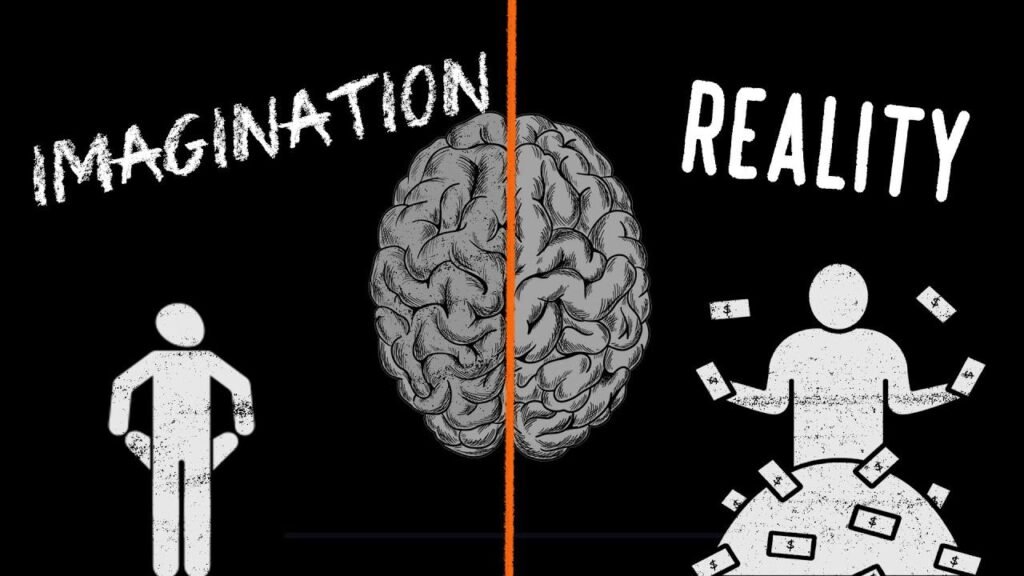
In simple terms, Seneca’s quote means that people often feel pain from what they think might happen rather than from what truly happens. Seneca observed that the mind naturally tries to predict danger, but this protective instinct can become destructive when it turns possibilities into certainties. Fear grows not from facts but from stories. The mind constructs scenarios of failure, loss, or humiliation that have not yet occurred. He highlighted three common mental habits:
- Exaggeration: turning small problems into imagined disasters.
- Anticipation: suffering in advance for events that may never take place.
- False certainty: assuming the worst outcome is guaranteed.
- Mental waste: spending emotional energy on things that do not exist.
These habits cause emotional pain that is often greater and longer lasting than the real challenge itself. The quote encourages mental discipline. It teaches individuals to separate reality from assumption and evidence from fear. Problems should be faced when they arrive, not endlessly rehearsed in advance. According to Stoic philosophy, external events may be beyond control, but judgment and emotional response remain personal responsibilities. In this way, Seneca’s statement is not a denial of hardship but a reminder that unnecessary suffering is optional. Clear thinking reduces emotional waste and strengthens resilience.
Life of the philosopher and his legacy
Seneca was born around 4 BCE in Corduba and educated in Rome in rhetoric and philosophy. Stoic teachings, emphasizing virtue, reason, and emotional control, influenced Seneca from an early age. His political career placed him close to power. After a period of exile, he became a tutor and later an adviser to Emperor Nero. Although his political life ended tragically in 65 CE, his intellectual legacy survived through his extensive writings. Seneca’s major works include moral essays on anger, grief, and happiness, as well as his famous letters which offer practical guidance on ethical living.
His writing style combined philosophical depth with direct instruction, making Stoicism accessible to ordinary readers. To understand his impact, we can look at some of his most influential sayings and how they compare to the core message of imagination versus reality.
| Quote Theme | Famous Seneca Saying | Core Philosophical Lesson |
| Imagination | We suffer more often in imagination than in reality | Fear is often self generated and false |
| Time | Life is long enough if it is well used | Focus on quality over quantity of years |
| Poverty | It is not the man who has too little but the man who desires more that is poor | Wealth is a state of mind and desire |
| Resilience | Difficulties strengthen the mind as labor does the body | Hardship is an opportunity for growth |
| Preparation | Luck is what happens when preparation meets opportunity | Control what you can to handle the unknown |
Modern applications for mental health
Modern stress is often driven by what-if thinking. People replay conversations, predict rejection, and imagine worst case scenarios. Seneca’s teaching encourages individuals to question these predictions and focus only on what is happening now. This approach aligns closely with contemporary cognitive techniques used to reduce anxiety. Social media also amplifies imagined suffering. Fear of judgment, comparison with others, and concern over public image often exist more strongly in the mind than in reality. Seneca’s quote reminds individuals that most of this pain is self generated and temporary.
In professional life, fear of failure often outweighs the actual consequences. Employees worry about mistakes, criticism, or job security long before evidence appears. Applying Seneca’s principle helps separate preparation from panic and promotes rational problem solving instead of emotional exhaustion. Health related anxiety is another example of imagined suffering. While responsible care is essential, constant fear without evidence leads to prolonged distress. Seneca’s insight promotes balance: take action based on facts, not fear driven speculation. Overall, the quote supports a lifestyle focused on reason, evidence, and present action rather than imagined disaster.
The enduring power of stoic logic
Seneca’s observation remains relevant because it addresses a universal human tendency: transforming uncertainty into suffering. Historical and modern psychological data both confirm that excessive worry plays a major role in stress related illness and reduced quality of life. By distinguishing between real problems and imagined ones, individuals conserve emotional energy and improve decision making. In contemporary society, where information overload heightens fear, this quote serves as a practical guide to mental clarity. It does not deny hardship but redefines how it should be approached with logic, proportion, and self control. In this sense, Seneca’s words remain not only philosophical wisdom but also a framework for healthier modern living.